


Is competitiveness something you’re born with, or is it something you build? In high performance—whether in sport, leadership, or life—developing a competitive mindset can make all the difference.
A Real-Life Lesson in Developing Competitiveness
The scene is fall training on the Schuylkill River in Philadelphia: Two by 3km in singles was a typical Saturday morning practice. We would line up at the start line above Strawberry Mansion Bridge, and one by one, our coach would send us off.
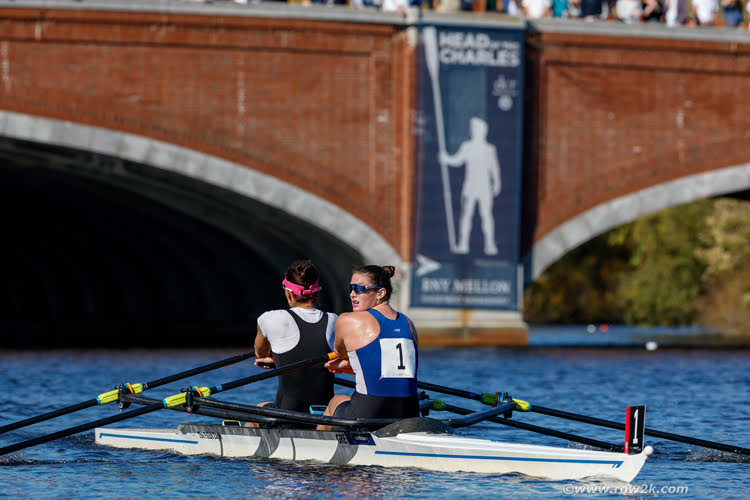
The course took us downriver through four bridges and around one fairly big turn to the Viking statue, just before Boathouse Row. In typical head race fashion, the slowest boats went first, with roughly 30-second gaps between each. If someone who started behind us began closing in, we had to yield.
I remember one Saturday when a teammate, five years my senior and, at the time, much faster and more accomplished, was closing in on me fast. As I rounded the Columbia Bridge turn, I was still ahead of her, sending the boat and doing everything I could to stay ahead.
As she gained on me, I had a front-row seat to her line through the bridge. It was:
- ✔️ Sharp
- ✔️ Aggressive
- ✔️ A true work of art.
Her line—the aggression and precision—was not something that came naturally to me. Quite frankly, a competitive mindset in the traditional sense never felt fully innate. And yet, later in my career, I earned World Championship gold.
Competitiveness is a skill. Like any skill, you can learn it, you can train it, and you can personalize it in a way that fully aligns with you. This is the most effective and powerful way to develop it in service of your vision of success and goals.
How to Train a Competitive Mindset (Step-by-Step)
You can’t train or develop what you don’t see or know. Intentional Change Theory—a formative framework for growth and development—begins with clarifying your ideal self, and moves to identifying your real self including your aligned strengths and gaps.
When it comes to competitiveness, start by asking: What kind of competitive mindset lights you up? Is it a playground or a battleground? A test of will or a test of skill? Are you striving to be your best—or the best?
There is no right answer, only what resonates as meaningful and motivating to you.
Then, walk through the following:
Step 1: Identify Strengths That Support Your Competitive Mindset
What strengths or traits support your ideal competitive mindset?
- Aggression
- Patience
- Focus
- Mental discipline
- Curiosity
- Willingness to embrace the hurt
What do you naturally bring to the start line? What have you trained—or want to train—over time?
Step 2: Challenge the Beliefs Holding You Back
Gut check! What thought patterns or beliefs might be holding you back?
- “I’m not a racer.”
- “I have to be perfect to win.”
- “They’re watching me.”
- “I don’t belong here.”
- Fill in your own:
Naming your limiting beliefs is the first step toward shifting them.
Step 3: Build the Skills That Sharpen Your Edge
Take inventory: What strategies or skills do you need to improve?
- More aggressive lines
- Sharper self-talk under pressure
- Faster mental reset after mistakes
- Quicker decision-making
- Clearer communication with teammates
Start small. Pick one. Test it. Train it. Have fun with it!
The Takeaway: Competitiveness Is Trainable and Personal
Competitiveness is not absolute. You don’t either have it or lack it, and it’s not about embracing traits that don’t align with your true self.
The mindset is multifaceted, personal, and of course, trainable. For some, it shows up as fierce and aggressive. And for others, it’s steady and strategic, or unwavering and strong.
What matters most is that your competitive mindset aligns with who you are and where you want to go.
Whether you’re leading a team, racing down a course, or working through a pivotal moment in your career, your mindset can and should serve you—and reflect the truth of who you are.


Comments